

Common Concerns About Root Canal Treatment
Getting to the “root” of the problem

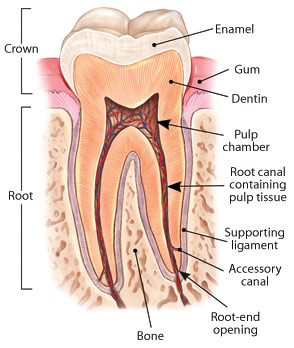
Dear Doctor,
I have a lot of questions about root canal problems and treatment — can you give me some guidance?
Dear Jennifer,
You're not unlike most people — the term “root canal” can send shivers down spines. However, preconceived notions that root canal treatment is filled with pain and discomfort are nothing more than outdated myths. In fact, root canal treatment doesn't cause pain but actually relieves it. Advances have made the treatment a virtually pain-free experience, many times accomplished in a single visit.
Despite this, many patients still don't exactly know what to expect and what root canal treatment is. Hopefully the answers to your questions will make you feel at ease — so ask away.
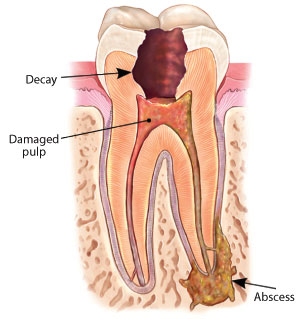
Q: Why is root canal treatment necessary?
Root canal or endodontic treatment (endo-inside, dont-tooth) is necessary when the inside, or pulp of a tooth becomes inflamed or infected. The pulp contains the nerves and blood vessels — essentially they keep the tooth vital (alive). It is through the pulp that temperature and pain are perceived. The inflammation or infection can have many causes but mostly are the result of deep decay or trauma.
Q: What are typical symptoms of root canal infection?
Depending on the cause, symptoms can be numerous and varied:
- Sharp, acute and intense pain, which is difficult to pinpoint
- Sharp pain when biting down on your tooth or on food
- Lingering pain after eating hot or cold foods
- Dull ache and pressure
- Tenderness (accompanied by swelling) in the nearby gums
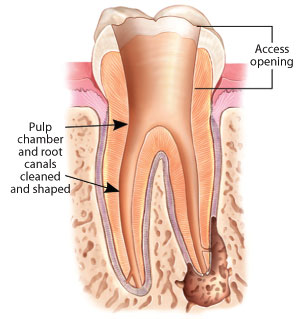
Q: How does endodontic treatment save my tooth?
The procedure begins by administering a local anesthetic to relieve pain. This will numb the tooth and surrounding area so that the treatment is no more uncomfortable than a filling. A common misconception is that root canal treatment is a painful experience when in actuality, it's quite the opposite.
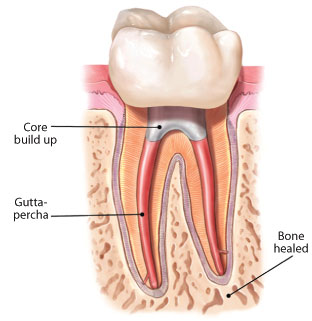
A small opening in the chewing surface of your tooth is created to gain access to the pulp. Very small instruments are used to remove dead and dying tissue and clean the pulp from the inside, allowing the root canals to be cleaned and disinfected. The canals are specially “shaped” and prepared so that they can be sealed with biocompatible filling materials. They are coated with an adhesive cement to ensure that they are completely sealed to prevent future infection.
It is becoming increasingly common today for root canal specialists to use microscopes for these intricate and detailed procedures to make the cleaning and shaping process more precise and efficient.
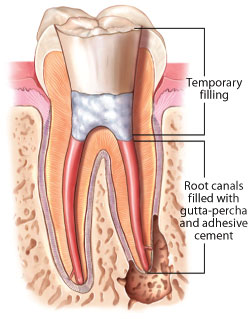
Q: What can I expect following the procedure?
For the first few days after treatment, your tooth may feel tender or sensitive, especially if there was pain or infection before the procedure. Most discomfort can be relieved by over-the-counter (OTC) medication like aspirin or ibuprofen. If you have discomfort or pain that lasts more than a few days or if there are other increasing symptoms, call your dentist. Prescription medications including antibiotics may be indicated.
You should not chew or bite on the treated tooth until you have seen your dentist, particularly if part of the tooth has been lost to decay, a large filling or trauma. A crown or other restoration is usually needed to further protect and restore the tooth to full function and is extremely important in ensuring long-term success. Contact your dentist as soon as possible to arrange for any necessary treatment.
Q: Can an infected tooth cause a general body infection?
Root canal infection can spread into the bone immediately around the root end if left untreated, although it usually remains localized to the area. An association has been shown between periodontal (gum) and to a lesser extent, endodontic (root canal) infection and some systemic (general) body diseases, but it is rare in an otherwise healthy person. Be safe, don't wait to get a root canal treatment done; just because it has stopped hurting doesn't mean it's not infected. Root canal treatment is designed to disinfect the tooth and stop spread of infection making it safe and effective.
Q: Who is qualified to perform root canal treatment?
All general dentists have received training in endodontic treatment and can perform most endodontic procedures, depending on their comfort level. Often they refer people needing complicated root canal treatment to endodontists, who have had specialized training and limit their practices to endodontic diagnosis and treatment. Endodontists perform routine as well as difficult and more complex procedures and are also experienced in helping to diagnose the cause of oral and facial pain that can be difficult to determine.
Root canal treatment doesn't cause pain, it relieves it.
Q: How is cost covered?
The cost varies depending on how severe the problem is and which tooth is affected. Cost is based on the number of canals, degree of difficulty and location of the tooth in the mouth; for example, front teeth are easier to treat than back teeth. Root canal treatment is usually covered by dental insurance depending on your coverage. If it isn't your dentist may also offer you a payment plan.
Q: I am surprised that there is so much to consider in root canal issues?
You're right, there are a lot of topics to cover in this area. In fact, endodontics is a whole specialty of dentistry dedicated to root canal treatment. Endodontics is represented by the American Association of Endodontists, a professional group that is also an educational resource for the public.